From Kazakhstan to Southfield, a Lawrence Technological University graduate student is helping redefine precision in robotic surgery through cutting-edge artificial intelligence research with real-world clinical implications.
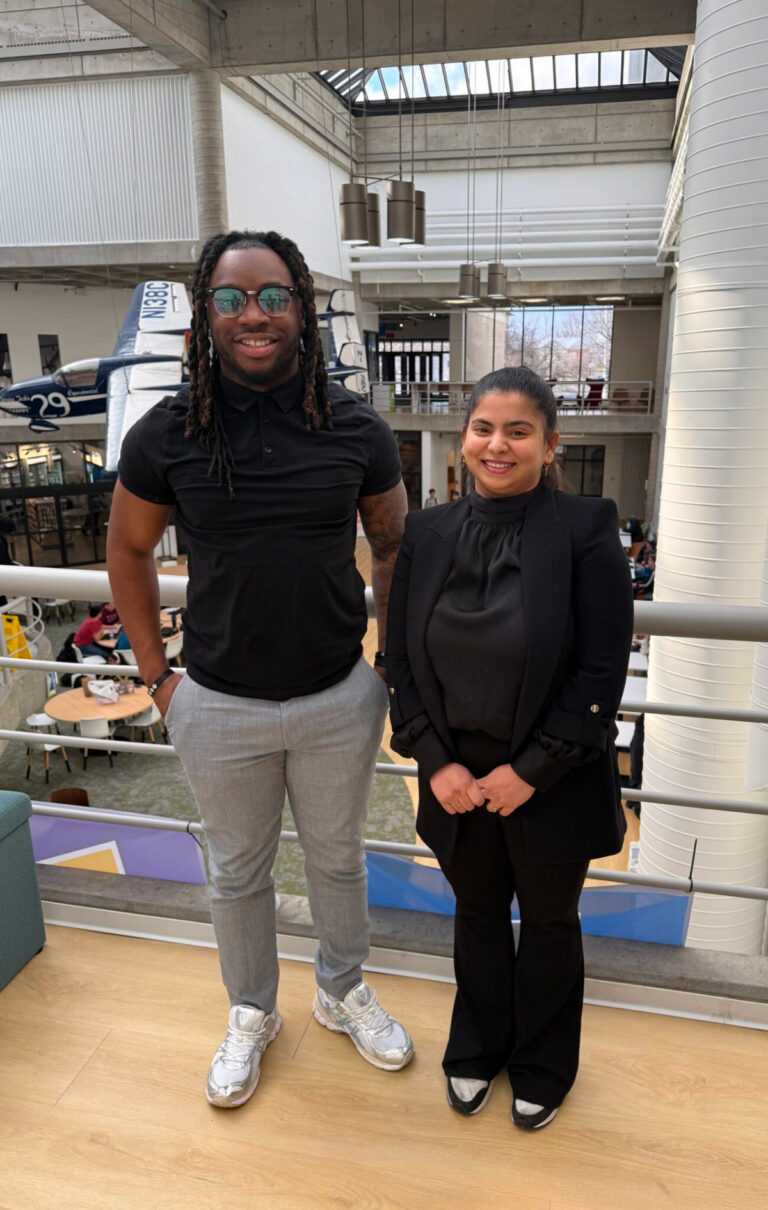
Daulet Kaldybek, an LTU master’s student in Electrical and Computer Engineering, is emerging as a leading contributor to advanced AI-driven surgical imaging. Through LTU’s 3+1 international partnership program with Astana IT University in Kazakhstan, Kaldybek transitioned seamlessly from undergraduate study abroad to high-impact graduate research in the United States, delivering peer-reviewed results in less than one academic year.
Under the mentorship of Nabih Jaber, PhD, assistant professor and chair of the Electrical and Computer Engineering Department, and Mostafa Daneshgar Rahbar, PhD, assistant professor, Kaldybek’s work exemplifies LTU’s strength in translating advanced engineering theory into solutions for complex, life-critical challenges.
Kaldybek is co-author of a recently published study in the International Journal of Clinical and Medical Case Reports, titled “Real-Time Intraoperative Tissue Characterization and Classification for Robotic Bariatric Surgery.” The research introduces a novel deep learning architecture designed to give surgeons clearer, faster and more reliable visual insight during robotic procedures.
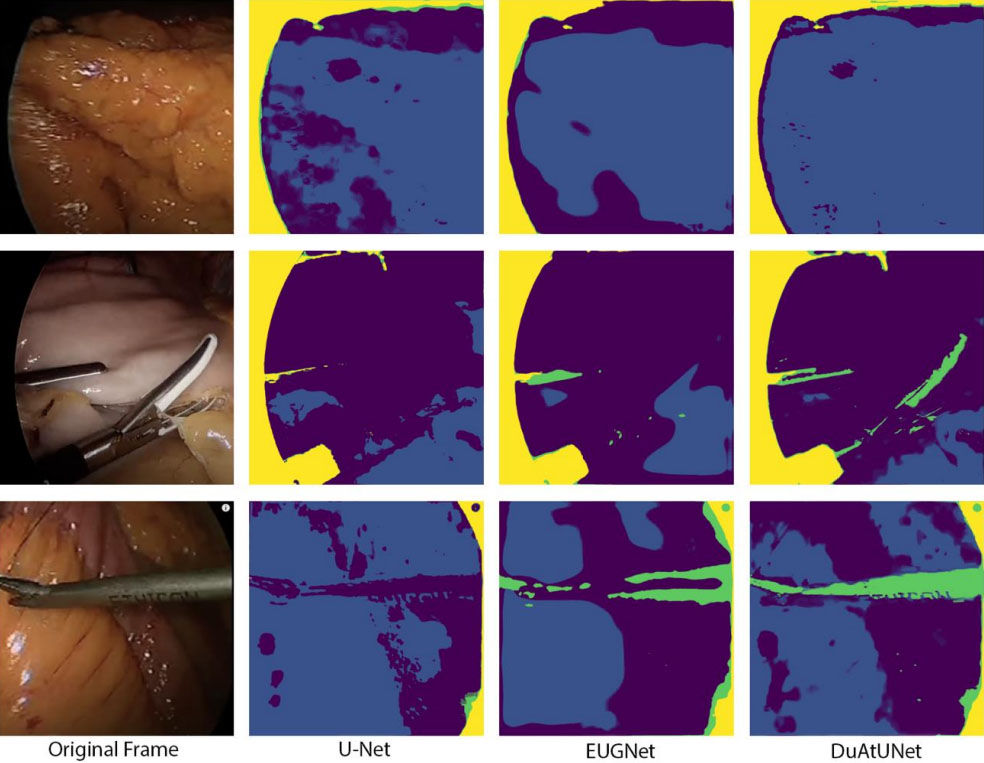
The team developed a Dual Attention U-Net (DuAtUNet) model that enables real-time identification and segmentation of fat, muscle and vascular tissue from live surgical video. By integrating dual-attention mechanisms that selectively focus on the most critical anatomical features, the model achieved 3% to 7% higher accuracy than standard industry approaches — an improvement that can translate directly into safer procedures and more confident intraoperative decision-making.
Published in February 2025, the study is openly accessible and positions LTU at the forefront of AI-enabled surgical innovation.
In a second major contribution, Kaldybek co-authored a Springer-published book chapter, “Vision Transformer-Based Fine-Tuned SAM for Enhanced Bariatric Surgery Image Segmentation.” The work adapts Meta’s Segment Anything Model (SAM) — a foundation model originally developed for general-purpose computer vision — for specialized use in medical imaging.
By fine-tuning the model on laparoscopic surgery datasets, the research achieved a Dice coefficient of 86.5%, outperforming several traditional segmentation techniques. The results underscore LTU’s emphasis on adopting leading AI tools and rigorously reengineering them to meet the precision, reliability and safety demands of clinical environments.
Building on this momentum, Kaldybek is currently collaborating with LTU’s Electrical and Computer Engineering Department on an additional book chapter under peer review.
Remarkably, all of these scholarly accomplishments were completed within two semesters at LTU, demonstrating the University’s capacity to accelerate graduate research productivity and global impact.