“The direction in which education starts a man will determine his
future life.”– Plato
Two emerging societal developments are converging to challenge some widely held tenets in higher education: the expansion of Artificial Intelligence and the waning support for higher education due to rising tuition costs and the growth of OL (or learn-from-home) education.
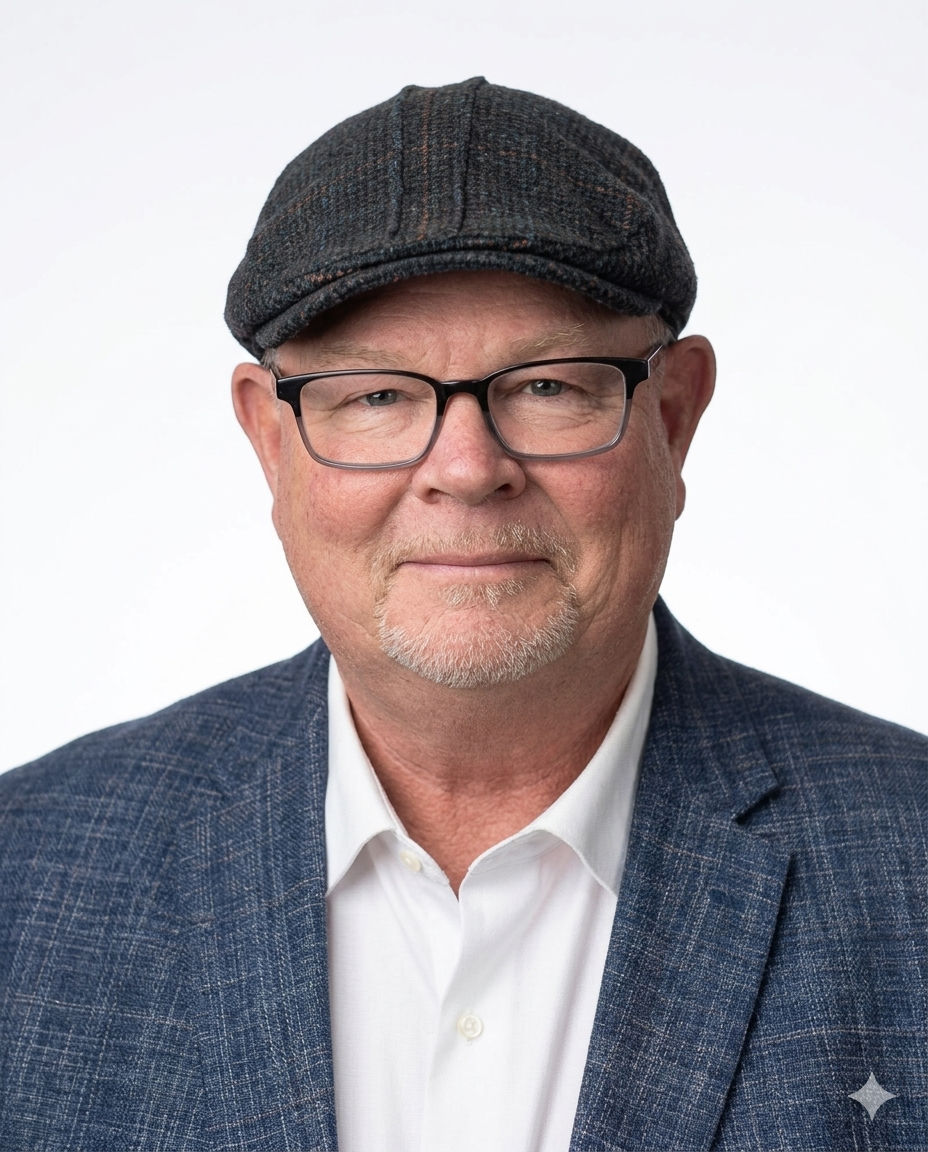
“The saying, ‘Why do I need that class as an engineer?’ is becoming more prominent. It is because of a lack of awareness instilled in today’s younger generation of the importance of foundational education. Some universities are feeding off this attitude to ‘save’ money, but do not realize the negative, non-linear impact of these decisions,” says Patrick Nelson, PhD, dean of the College of Arts and Sciences (CoAS) at Lawrence Technological University.
From Learn.org, “Every bachelor’s degree program comes with a set of required general education classes. These classes are designed to ensure that every student earning a college education is well-rounded, with opportunities to pursue any major as they please.” When said this way, it sounds like something of limited importance, when it should be announced as the critical foundation of any discipline and the “key differentiator” that will allow humans to stay ahead of AI.
At LTU, these foundational (core) courses are found in CoAS. Courses in the humanities, math and computer science, and the natural sciences are required for all LTU students, whether their goal is a bachelor’s degree in these fields or in professions offered in the sister colleges of Engineering, Architecture and Design, Business and Information Technology, or Health Sciences. It is one of LTU’s main differentiators due to its significant investment in ensuring all students can think, reason, and formulate opinions that challenge societal norms. Hence, developing the future leaders of today.
Indeed, as Paul Jaussen, PhD, chair of the Humanities, Social Sciences, and Communication Department, says, “The Higher Learning Commission requires 30 credits of general education to qualify for a Bachelor of Arts or a Bachelor of Science degree.” With Jaussen leading a team of LTU scholars, LTU introduced an updated version of the university’s Core Curriculum with the 2024 academic year.
Nelson says, “CoAS is the only college that interacts with every student at LTU through its core curriculum. No major at LTU can exist without the foundations that math and computer science, natural sciences, and humanities, social science, and communication provide. It’s the DNA of this university.”
“CoAS is the only college that interacts with every student at LTU through its Core curriculum. No major at LTU can exist without the foundations that math and computer science, natural sciences, and humanities, social science, and communication provide. It’s the DNA of this university.”
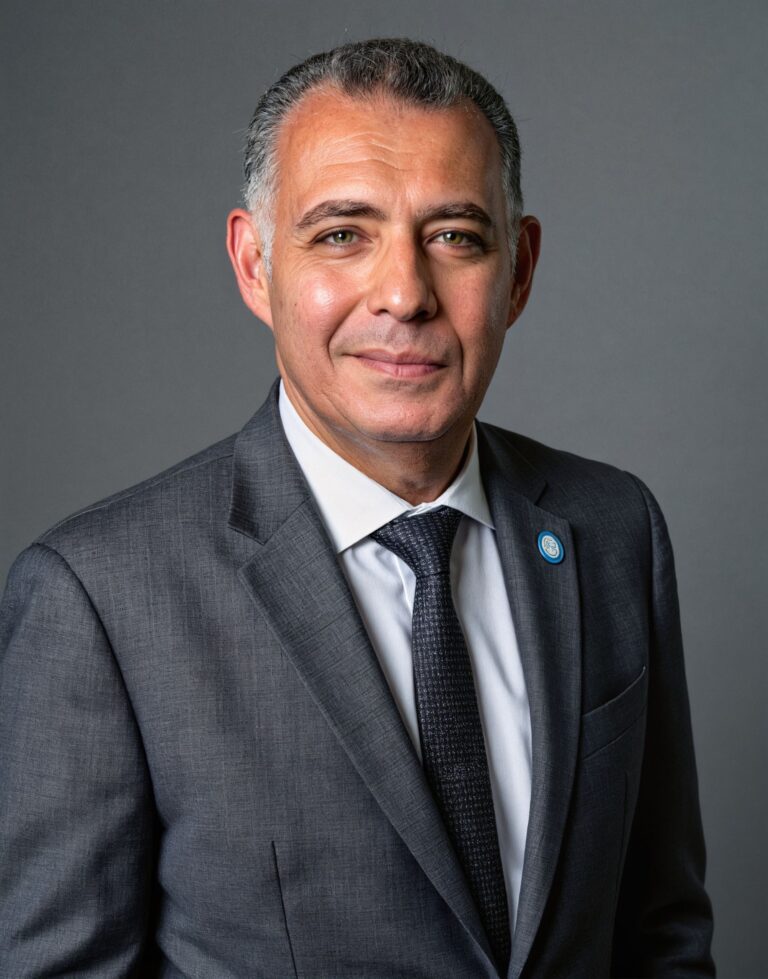
– Patrick Nelson, PhD, Dean, College of Arts and Sciences
He posed a couple of not-so-philosophical questions. “Can AI teach you how to read? No. Can AI help a kid with a math problem? Sure. Is AI going to teach how to solve a math problem? Depends on the problem. The issue is that people forget that AI is, at its core, just math and computer science! Our purpose is to ensure our students, faculty, and team learn how to use this technology and exist with it while not allowing one to be dependent on this technology. We teach our students to become master learners!”
With Nelson and Jaussen, the chairs of the Department of Math and Computer Science, Eric Martinson, PhD, and the Department of Natural Sciences, Shannon Timmons, PhD, agreed that the notion of liberal arts education has been distorted to have a political connotation or represent a political ideology. Jaussen explained, “Liberal means liberty. What does it mean to a free citizen, a free agent in society?”
As needs changed, so has the core curriculum to provide the foundation to become a discerning and “free” citizen. To Jaussen, that meant realigning the core curriculum to “put the ‘human’ in ‘technology.’ For example, the humanities core courses are designed so that the students drive the classroom experience with inquiry, with curiosity, giving them critical thinking skills.”
Built around a strongly interactive engagement with literature, history, philosophy, mathematics, science, and the arts, the core curriculum also emphasizes shared intellectual experiences within a community of learning through reading, directed discussions, group presentations, and problem-solving teamwork.
Nelson said, “We don’t coddle 18 and 19-year-olds. Instead, we challenge them with a curriculum built to encourage them to ‘ask the big questions.’” He posed a couple himself. “How do we make sense of our existence? How do I make a positive impact on others?”
Fundamentally, the core curriculum connects students to the disciplinary knowledge that they get in their major areas of study – it is the basis of “Theory and Practice!”
“Scientific literacy is critical in today’s world; there’s a lot of information available about our natural world, but not all that information is credible. How do you critically evaluate what’s true?” – Shannon Timmons, PhD, Department Chair, Department of Natural Sciences
“Scientific literacy is critical in today’s world,” Timmons said. “There’s a lot of information available about our natural world, but not all that information is credible. How do you critically evaluate what’s true?
“That’s why we must teach the fundamentals of science. In Natural Sciences, we embrace LTU’s motto — ‘Theory and Practice’ — because students learn science best through hands-on engagement in the lab.”
Martinson went back to the AI example. “We get the idea that AI systems have the solutions to everything, though we know that they don’t. But let’s say they’re right 99 percent of the time. AI is still wrong 1 in 100 times. Without basic math and computer knowledge, you’d spend the bulk of your time figuring out what went wrong.”
Looking to the future, all our professors agree that “one of the things that is going to differentiate human workers is their capacity to take responsibility, to have a stake in the outcome of our actions, to think logically and quantitatively about the consequences of our actions. This is where each of our disciplines complements the others.”
As Nelson says, “The foundation CoAS provides can be transformative for a person.”