LTU Engineering Students Design and Deliver Systems That Compete at the Highest Level and Perform When It Counts
At Lawrence Technological University, engineering students are measured by how their work performs.
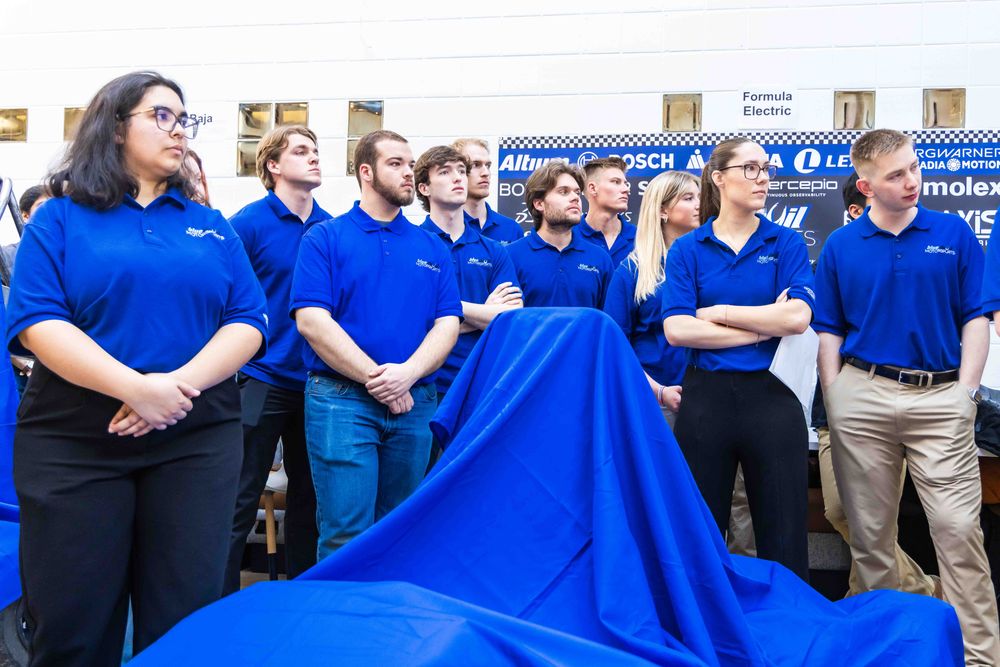
This spring, Blue Devil Motorsports teams rolled out their 2026 vehicles, putting months of design and build work on display in a moment that felt closer to race day than a classroom.
The unveiling marked the shift from preparation to performance. From here, teams head into competition against top universities from around the world, where every decision shows up on the track.
Built for Results
Across every team, the expectation is the same. Students take ownership of the full process, from early design decisions through fabrication and testing. The outcome is not a prototype. It is a working system expected to perform.
“In these projects, students are accountable for outcomes, not just ideas,” said Selin Arslan, PhD, Associate Dean for Undergraduate Programs, and Associate Professor, Department of Mechanical, Robotics, and Industrial Engineering, LTU’s College of Engineering. “That changes how they think. They start to see the consequences of every decision they make.”
The Formula Electric team’s 2026 car reflects a clear focus on measurable improvement. A redesigned chassis reduces weight and increases rigidity, directly impacting handling and stability on the track, where small gains translate into competitive advantage. The result is a fully assembled vehicle with time for testing and refinement ahead of competition in New Hampshire.
Powered by a Yamaha R7 engine tuned for E85 fuel, the Formula SAE vehicle brings together mechanical, electrical, and control systems that must operate as one. The team, which will compete in May 2026 at Michigan International Speedway against top programs from around the world, built early momentum through industry support and design validation, then moved into fabrication this spring.
“Students have to think in terms of systems,” Arslan said. “A change in one area affects everything else. They learn that quickly when they are responsible for making the whole vehicle work.”
Engineering Under Pressure
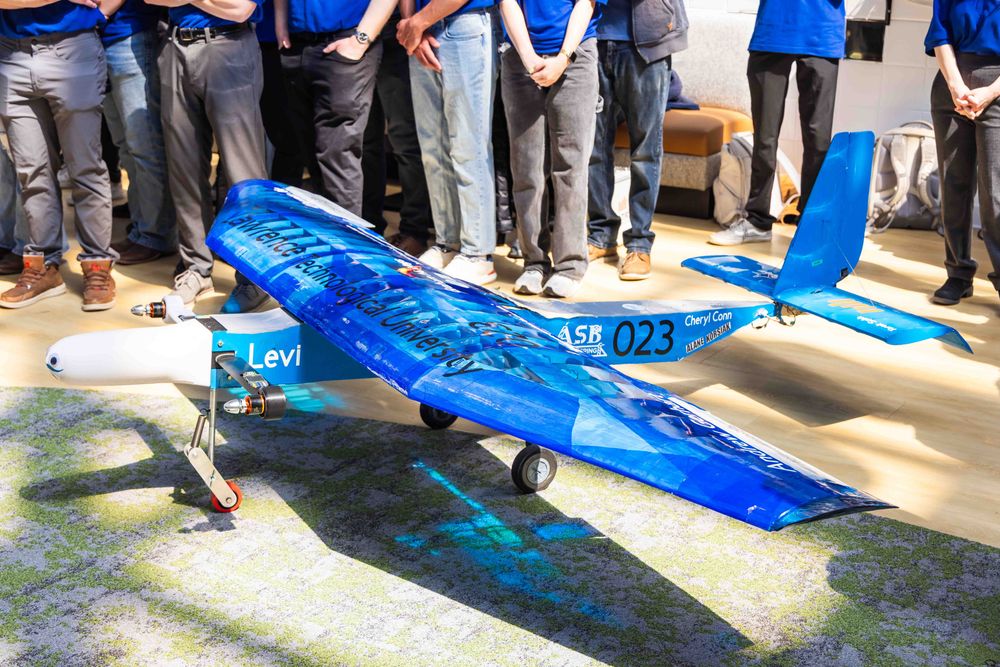
This year’s SAE Aero Design competition introduced new challenges that required a full rethink of the aircraft. Multi-motor requirements and shifting payload conditions added complexity to both design and testing.
“Constraints are part of real engineering,” Arslan said. “Students learn how to adapt quickly and make decisions with incomplete information.”
The Baja SAE team is focused on durability. Their vehicle is designed to handle difficult terrain and a multi-hour endurance race, all within rules that limit engine modifications. With a small team, students moved efficiently from design into production. They will compete this summer in New York alongside more than 100 universities.
Where Results Show
The Intelligent Ground Vehicle team is developing an autonomous system capable of navigating a complex course without human input. Using sensors, cameras, GPS, and independent wheel control, the vehicle detects obstacles and adjusts in real time.
“What stands out is the level of integration,” Arslan said. “Students are combining mechanical design, electronics, and software into one system that has to operate reliably in unpredictable conditions.”

Across every team, the standard is the same:
Design it.
Build it.
Make it work.
Then prove it in competition.